Genel

Tire Protection Chains: A Global Market Expansion Story

Image of a silver globe keychain beside coins and dollar bills.

Tire protection chains have been a crucial component in various industries for decades. They provide enhanced traction and durability to heavy machinery operating in challenging terrains. These unassuming chains, often overlooked by the general public, play a vital role. They ensure that construction equipment, mining vehicles, forestry machines, and agricultural tractors can operate efficiently in adverse conditions.

In recent years, the tire protection chain industry has experienced significant market expansion. It has been driven by global market expansion efforts, technological advancements, and the ever-increasing demand for improved performance and safety. This article explores the tire protection chain industry’s journey and the factors contributing to its global market expansion.

The Evolution of TPC in Market Expansion

Tire protection chains, usually known as snow chains or tire chains, have a rich history dating back to the early 1900s. Originally designed for automobiles to enhance traction on icy roads, their utility quickly extended to other vehicles facing challenging terrains. 

Tire protection chains are now suitable for a range of applications due to a considerable design, material, and production technique developments throughout time.

Early Applications

Before we talk about the market expansion of the tire protection chains, let’s talk about their early applications. 

First, protection chains were primarily in the transportation sector, where they were used to combat snow and ice on roads. The need for tire protection chains in off-road applications became more important in industries like agriculture, mining, and construction. Chains were modified to survive the difficult conditions seen in these sectors, resulting in the development of specific designs for varied heavy machines.

Technological Advancements

The evolution of tire protection chains has been marked by significant technological advancements. Modern chains are constructed using high-strength alloy steel, ensuring both durability and reliability in the toughest environments. The development of advanced chain patterns and innovative fastening systems has also improved performance and ease of installation.

The Global Demand for TPC in Market Expansion
The global market expansion for tire protection chains has been growing gradually, owing to a number of causes, including:

Growing Construction and Infrastructure Development

Accelerated urbanization and infrastructure development in emerging economies have led to an increased demand for construction equipment. These machines often operate in challenging environments, such as construction sites with uneven terrain and off-road access. These tools frequently work in difficult conditions, such rocky building sites with off-road access. Tire protection chains enable these vehicles to maintain traction and stability, making them indispensable in the construction industry.

Mining Industry Expansion

The mining industry is vital to the global economy and relies heavily on tire protection chains. The mining equipment operates in some of the most extreme conditions, including rocky terrains and slippery surfaces. Tire protection chains not only improve traction but also extend tire life, reducing maintenance costs for mining companies.

Agriculture and Forestry

In agriculture and forestry, protection chains play a crucial role improving the performance of tractors, combine harvesters, and forestry machines. These machines often work in muddy fields or densely wooded areas, where traction is essential for productivity.

Since the global population continues to grow, the demand for agricultural and forestry machinery is expected to rise. Also, increasing the demand for tire protection chains and making part of its market expansion. 

Market Expansion Strategies

To meet the increasing global demand for tire protection chains, manufacturers have adopted various strategies to expand their presence in international markets. These strategies include:

Market Research and Analysis

Now, before entering a new market, tire protection chain manufacturers conduct comprehensive market research and analysis. This is to understand local needs, preferences, and competition. 

It helps them to modify their products and marketing plans in order to satisfy certain market demands.

Distribution Partnerships

A typical strategy for market expansion is to work together with regional distributors and dealers. Since local distributors have established networks and market expertise, it is easier for manufacturers to enter new markets. 

Product Customization

In order to succeed with market expansion, tire protection chain designs have been modified to fit local requirements. Different terrains, climates, and industries demand different chain designs. Ofcourse, manufacturers have to keep disposal to modify their products according to market needs. 

Marketing and Promotion

In order to raise knowledge regarding tire protection chains in new markets, it is necessary effective marketing and promotion. Manufacturers spend money on marketing campaigns, trade fairs, and exhibits to promote their products and develop brand awareness.

After-Sales Support

It is critical to provide great after-sales support, including training and technical help, to ensure customer happiness and loyalty. Manufacturers who provide extensive assistance typically have a competitive advantage in foreign markets.

Technological Advancements in TPC for Market Expansion

In addition to global market expansion efforts, tire protection chain manufacturers continue to invest in research and development to enhance product performance and versatility. Some of the notable technological advancements include:

Self-Tensioning Systems

Self-tensioning tire protection chains have gained popularity in recent years. These systems automatically adjust chain tension, reducing the need for manual adjustments and maintenance. This innovation enhances safety and convenience for operators.

Lightweight Materials

The use of lightweight materials, such as advanced alloys and composites, has allowed manufacturers to create tire protection chains with better quality.  They offer increased strength while reducing overall weight. This not only improves fuel efficiency but also extends tire life.

Smart Chains

The integration of technology into tire protection chains is a growing trend. Operators can make intelligent choices and avoid errors by using “smart chains” that are fitted with sensors and monitoring systems. These chains can give real-time data on chain performance, wear, and possible concerns.
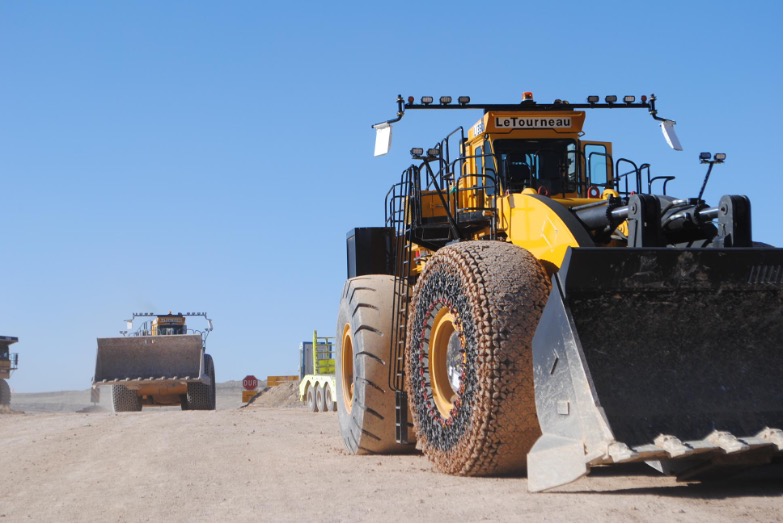
As a young player of the game, Las Zırh, is always ready for change and innovation; open and flexible for the new ideas.

In conclusion, tire protection chains, originally a specialized product, have grown into a crucial component for a variety of sectors working in adverse environments. The growth of the tire protection chain business looks unstoppable as the need for construction, mining, agricultural, and forestry machinery increases on a global scale. 

Key players in the industry, such as Pewag Group, RUD Group, and Las Zirh -which is the third largest manufacturers of Tire Protection Chains Market worldwide- are leading the way with their commitment to quality, innovation, and international market expansion.

To succeed in this competitive landscape, and succeed in global market expansion, tire protection chain manufacturers must continue to adapt and innovate. This includes customizing products to suit regional needs, forming strategic partnerships, investing in marketing and promotion, and embracing technological advancements.

As tire protection chains continue to evolve, they will play an increasingly vital role. Therefore,   it enables heavy machinery to operate safely and efficiently around the globe, contributing to the growth of various industries and economies.

Genel

The Environmental Impact of Using Tire Protection Chains for OTR Tires

Recycling symbol featuring a tire, emphasizing eco-friendly practices.

As the primary component connecting equipment to the ground,  OTR tires are essential to a vehicle’s efficiency, safety, and mobility. The performance specifications and environmental factors for large machinery have been revised by tire technology looking for improvement in fuel efficiency, reduced emissions, and increased durability. By using OTR tires that meet these updated specifications as useful accessories like tyre protection chains, companies can not only enhance their environmental sustainability but also improve the overall performance and longevity of their vehicles. 

We are going to explore a crucial aspect in the world of heavy machinery – “The Environmental Impact of Tire Protection Chains for OTR Tires.” We explore the function of tire protection chains, looking at how these creative approaches support sustainable practices and environmental responsibility while also extending the life of off-road (OTR) tires. We find a balance between the harsh demands of industrial operations and the preservation of our planet as we peel back the layers of this environmental impact. 

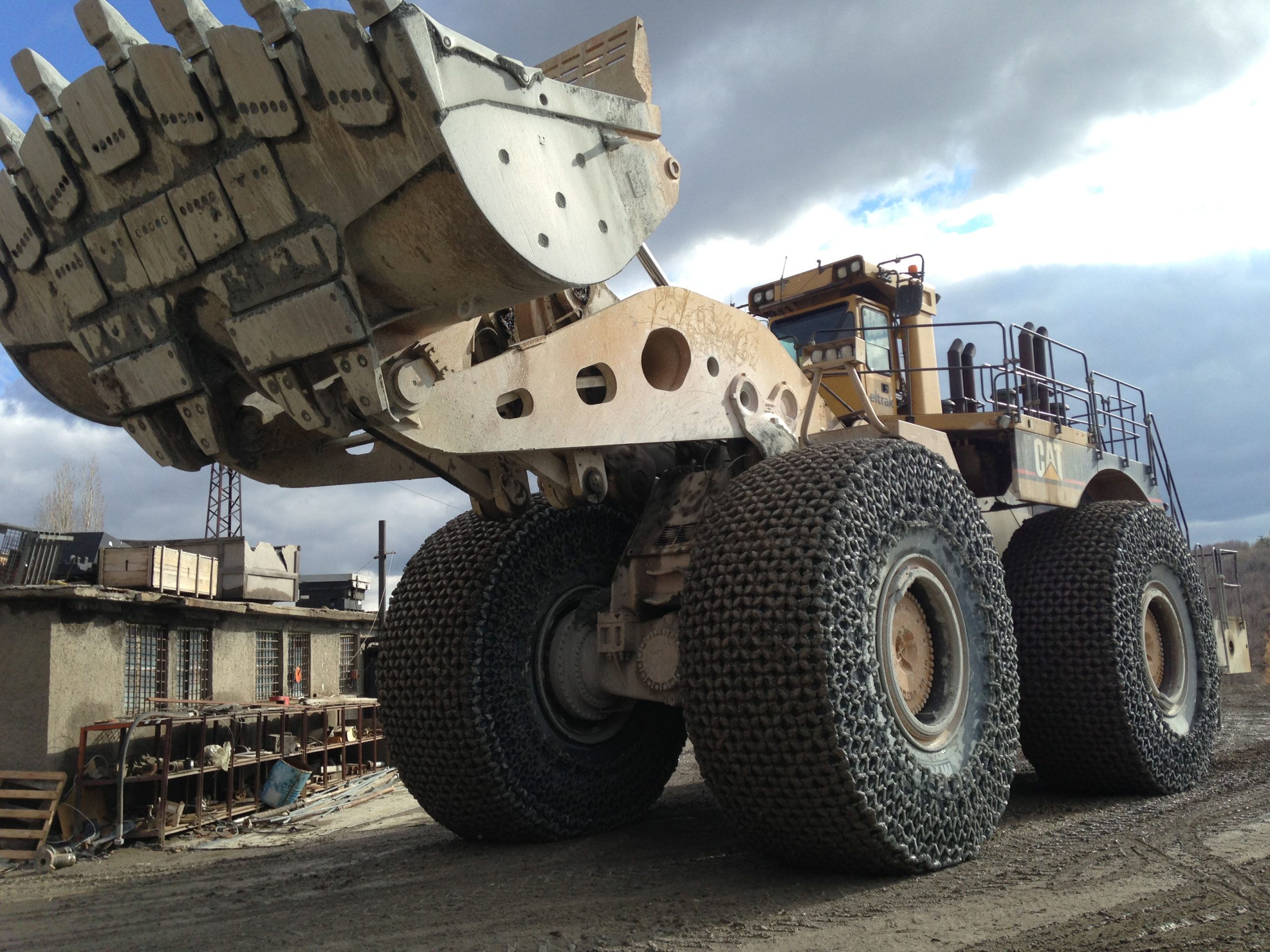
Tire Protection Chains provide a formidable defense against the wear and tear experienced by OTR tires in difficult terrain.

How Tire Protection Chains, Protect Our Environment? 

Innovations that meet industrial needs while maintaining ecological balance are critical. At a time when environmental sustainability is one of the world’s top concerns. 

This article explores Tire Protection Chains (TPCs) for Off-the-Road (OTR) tires and their effects on the environment. Unfortunately, tyres are high-carbon products. Therefore, we investigate the role of TPCs in promoting a more environmentally conscious approach within industries reliant on heavy machinery. By examining how they contribute to tire life, waste reduction, and overall efficiency.

Tire Protection Chains Increase Tire Life and Reducing Waste

Improve Durability

Tire Protection Chains provide a formidable defense against the wear and tear experienced by OTR tires in difficult terrain. The chains act as a shield, absorbing the impact of abrasive materials and sharp objects, extending tire life significantly. As a result, the need for frequent tyre replacements is reduced, lowering the overall volume of tire waste generated by industrial operations.

Reducing the Environmental Impact of Tire Disposal

Tire disposal is a significant environmental challenge due to its inability to biodegrade. Recycling the tires is an expensive and difficult process. The use of TPC industries can help reduce tire disposal. As a result, the environmental impact of tire waste by using TPCs to extend the life of off-road tires. 

Tire Protection Chains Improve Fuel Efficiency and Carbon Footprint

Reduced Rolling Resistance

Tire Protection Chains help reduce rolling resistance in off-road tires by adding traction and stability. Tire protection chains reduce tire consumption by preventing punctures and premature wear. For heavy machinery, this reduction in resistance means increased fuel economy. The reduction of fuel consumption leads to a corresponding decrease in greenhouse gas emissions, thereby improving industrial operations’ carbon footprint.

Lower Carbon Emissions Through Operational Efficiency

Efficient operations, facilitated by the enhanced traction and stability offered by TPCs, result in machinery that operates more smoothly. As machinery operates more smoothly, less energy and power are required, which lowers carbon emissions. The larger objective of reducing the carbon footprint in industrial settings is in line with the positive cycle that TPC use creates.

Increased Tire Re-Treatability

Protecting the carcass of the tires increases the re-treatability of the tyres up to three times. This increased re-treatability not only extends the lifespan of the tires but also reduces the demand for new tire production, further contributing to a more sustainable and eco-friendly approach in the industrial sector. 

Additionally, by protecting the carcass of the tires, chains also help prevent punctures and damage, minimizing waste and reducing the environmental impact associated with tire disposal. 

Sustainable Resource Management

Conservation of Raw Materials

Off-the-road (OTR) tires are made of mainly: Natural Rubber, Synthetic Polymers, Steel and Antioxidant and Antiozonant curing materials. By extending the lifespan of OTR tires through the use of TPCs, the demand for new tires decreases. Tyre protection chains, make the OTR tires reusable.

This, in turn, contributes to the conservation of raw materials, aligning with sustainable resource management practices.

Long-Term Economic Benefits and Resource Efficiency

Tyre protection chains, lengthen the life of tires and keep them in operation for longer periods. By reducing the need for tire replacements, industries can save on expenses related to purchasing new tires and disposing of old ones. Additionally, the use of TPCs promotes resource efficiency by minimizing the consumption of raw materials required for tire production. 

This not only benefits the industries financially but also helps conserve valuable resources for future generations. The preservation of existing resources through extended tire life ensures a more sustainable utilization of materials, promoting environmental responsibility within industrial practices.

Tire Protection Chains Enhancing Workplace Safety and Environmental Responsibility

Prevention of Accidents and Environmental Damage

Accidents and environmental harm can arise from tire blowouts and failures. Utilizing TPCs reduces the likelihood of tire-related incidents by acting as a preventive measure. In addition to guaranteeing worker safety, this also averts possible hazardous material spills or leaks, further in line with environmental preservation objectives.

Promoting an Environmentally Conscious Culture

The use of TPCs promotes an eco-aware culture in industrial environments. As industries prioritize solutions that enhance operational efficiency and contribute to environmental sustainability, a shift towards more responsible practices takes root. To encourage a sense of commitment and dedication to the environment, a cultural shift is essential.

This cultural shift involves educating employees about the importance of environmental preservation and providing training on the proper handling and disposal of hazardous materials. Additionally, implementing rewards and recognition programs for environmentally friendly initiatives can help foster a sense of pride and motivation among employees to actively participate in eco-conscious practices. 

Protecting the carcass of the tires increases the re-treatability of the tyres up to three times. 

In conclusion, Tire Protection Chains for OTR tires play a crucial role in protecting the environment within industrial settings. They help minimize tire wear and tear, reducing the need for frequent tire replacements and ultimately reducing waste. This not only saves costs for businesses but also reduces the overall carbon footprint of the industry. 

By extending the lifespan of tires, TPCs also contribute to conserving natural resources, as fewer raw materials are needed for tire production. Additionally, the use of TPCs can lead to improved safety in industrial settings by reducing the risk of tire blowouts and accidents caused by worn-out tires.  Adopting TPCs is becoming more than just a sensible decision—it’s also a responsible move towards a more environmentally conscious and sustainable future, as industries work to balance operational needs with environmental obligations.

Genel

Exploring Performance and Safety with Loader Tire Chains

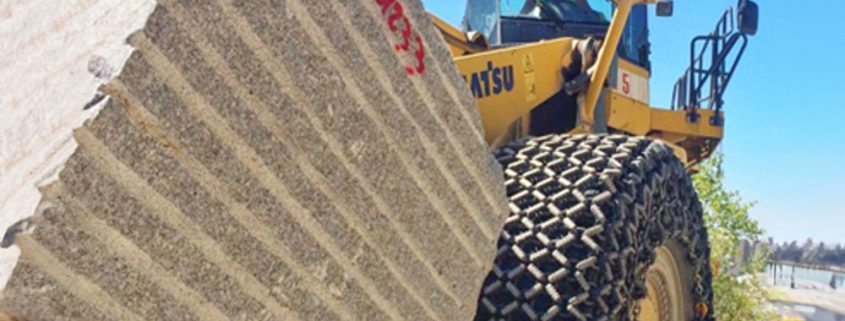
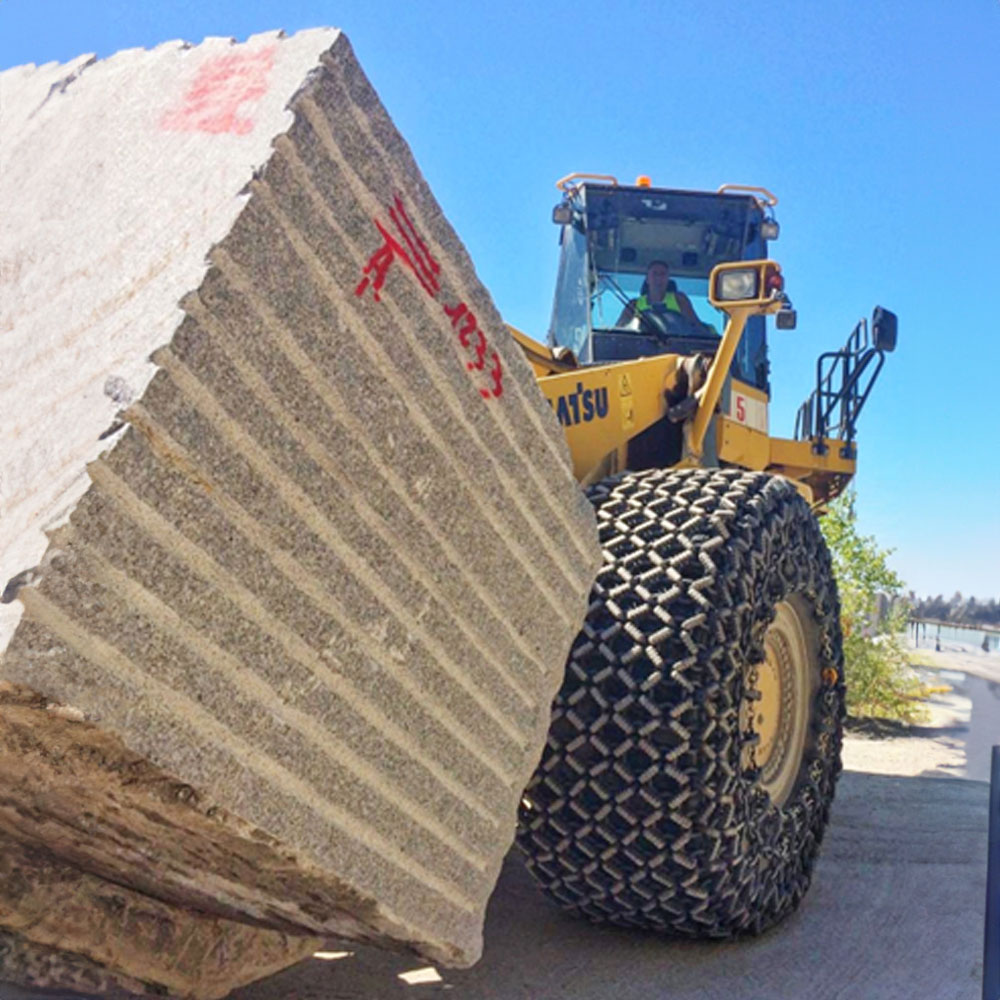
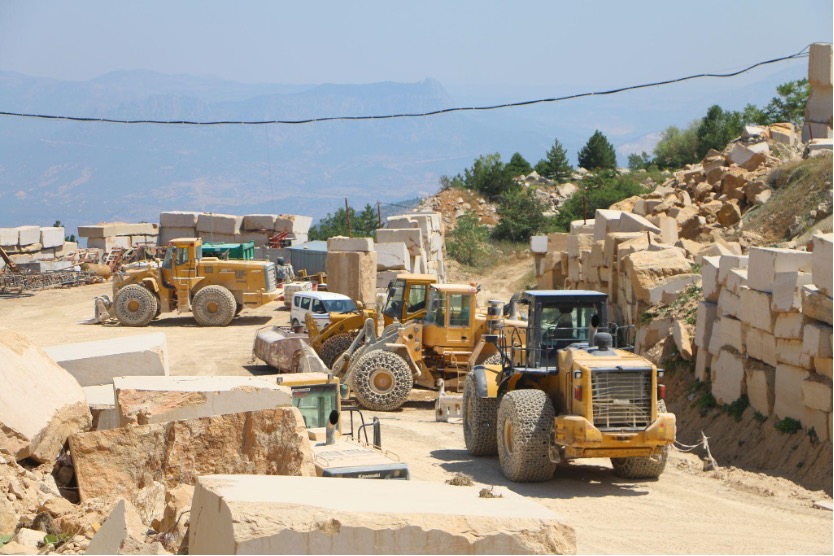
Heavy machinery equipped with a tire protection chain moving a concrete block.

Loader Tire Chains: Improving Performance and Safety in Difficult Situations

Industries like construction, agriculture, forestry and mining, loader tire chains play an important role.  In these industries, operations are performed in areas where conditions are truly harsh. Therefore, we will review its applications and advantages in this article.

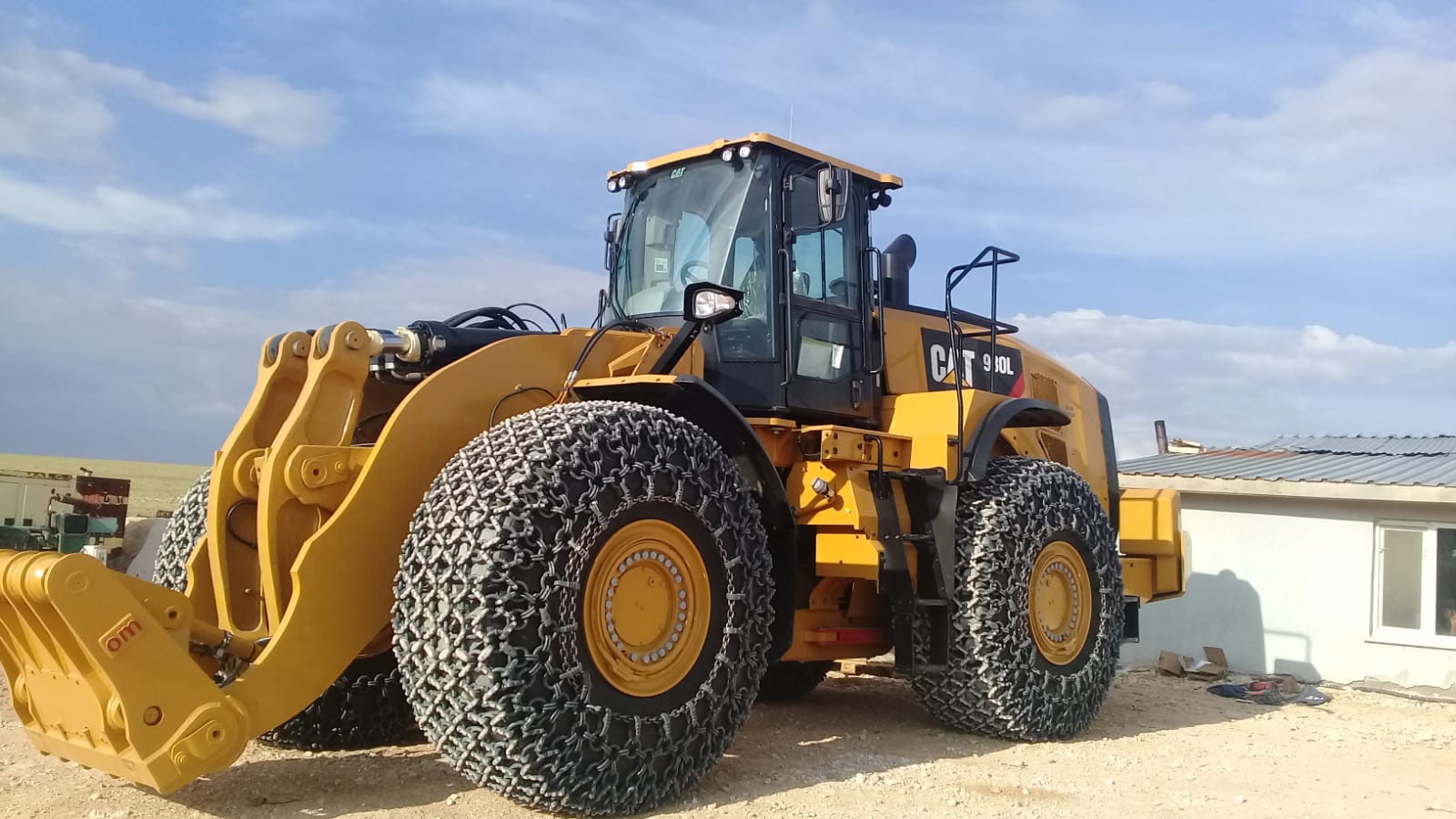
Wheel loaders are versatile machines designed to tackle a wide range of tasks. They can move from materials to clearing roads and working in challenging terrains. Loader tire chains are specialized accessories that offer improved traction, stability, and safety. They enable loaders to operate efficiently in the toughest conditions.

However, their effectiveness can be significantly compromised when operating in adverse conditions like snow, mud, ice, or steep slopes. This is where loader tire chains come into play.

In this comprehensive article, we will explore loader tire chains in detail. We will delve into their pivotal role they play in enhancing both performance and safety in various industries.

Understanding the Significance of Loader Tire Chains

The Crucial Role of Traction

First, traction is essential for efficient loader operation. Wheel loaders require extra traction to operate at their best on slick, uneven, or difficult conditions. And this is what loader tire chains are designed to offer.

Benefits of Using Loader Tire Chains

Loader tire chains offer a multitude of benefits, let’s list some of them:

  • First, Enhanced Traction. Loader chains significantly improve traction, as a result, they reduce the risk of slippage and enhance productivity.
  • Second, Safety. Increased traction contributes to improved safety for both operators and people around them.
  • Third, Versatility. These chains allow loaders to work efficiently in diverse environments, making them versatile and cost-effective.
  • Fourth, Extended Tire Life. Loader tire chains minimize tire wear due to slippage, they contribute to longer tire lifespan.
  • Fifth, Fuel Efficiency. Improved traction consequently results in better fuel efficiency, reducing operational costs.
Loader tires are an important accessory to establish efficiency, safety, and overall performance.

Wheel Loader Tire Chains Applications

Wheel loaders are versatile heavy equipment machines that find applications across a wide range of industries and construction projects.

Construction Industry

In the construction industry, wheel loaders are indispensable for various tasks, including:

Material Handling

Wheel loaders are excellent at transporting heavy building materials including gravel, sand, boulders, and garbage.  Their large buckets can efficiently load, transport, and unload materials at construction sites, speeding up the workflow and reducing manual labor.

Excavation and Grading

Wheel loaders equipped with specialized attachments like forks and grapples are used for digging, grading, and leveling tasks. They can quickly reshape landscapes and prepare foundations for buildings and roads.

Snow Removal

In colder climates, wheel loaders equipped with snow plows and snow blowers are crucial for clearing roads, parking lots, and driveways after heavy snowfall.

Agriculture

Wheel loaders play a vital role in modern agriculture:

Handling Bulk Materials

Farmers use wheel loaders to transport bulk materials such as feed, silage, and manure. The loader’s bucket capacity ensures efficient loading and unloading of these materials.

Clearing Debris

After storms or during land preparation, wheel loaders are used to clear debris and fallen trees from fields. They can also move large bales of hay or straw.

Handling Crop Produce

Wheel loaders help load harvested crops like grains, fruits, and vegetables onto trucks for transport to storage facilities or marketplaces.

Mining and Quarrying

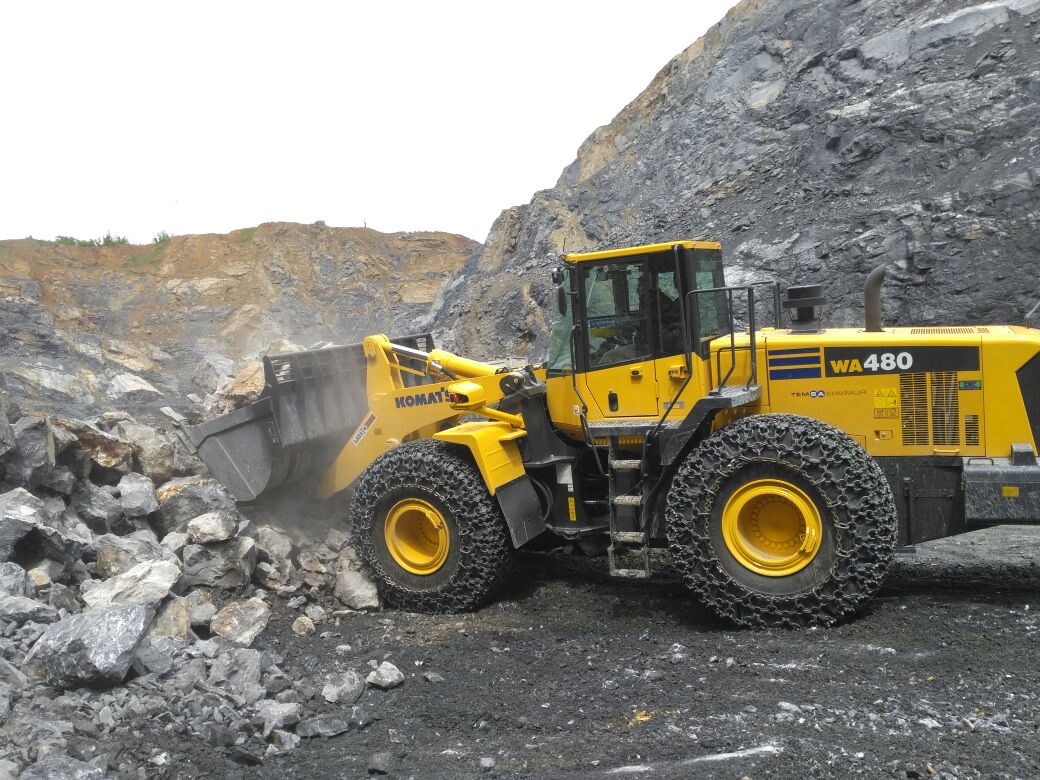
In the mining and quarrying industry, wheel loaders are essential for various operations:

Loading Haul Trucks

Wheel loaders load ore, rock, and overburden materials into large haul trucks, increasing the efficiency of mining operations.

Stockpiling

Wheel loaders are used to create and maintain stockpiles of mined materials, allowing for efficient inventory management and controlled material flow.

Site Cleanup

Wheel loaders aid in cleaning up mining and quarry sites by moving waste material and reclamation efforts.

Waste Management

Wheel loaders are employed in waste management and recycling facilities:

Loading Waste Materials

They load waste materials into shredders, compactors, or conveyor belts for further processing and recycling.

Handling Recyclables

Wheel loaders play a crucial role in sorting and handling recyclable materials like paper, cardboard, plastics, and metals at recycling centers.

Forestry

In the forestry sector, wheel loaders are used for:

Logging Operations

Wheel loaders equipped with grapples and forestry attachments handle logs, making them ready for transportation to sawmills.

Land Clearing

They are used to clear land for logging operations, creating access roads, and removing underbrush.

Ports and Material Handling Facilities

Wheel loaders are employed in ports and material handling facilities for:

Loading and Unloading Cargo

They load and unload containers, pallets, and bulk materials from ships, trucks, and warehouses.

Stockpile Management

Wheel loaders help manage and organize stockpiles of various goods, ensuring efficient material flow.

Maintaining Loader Tire Chains

Regular Inspection

Proper maintenance is essential to extend the lifespan of loader chains. This section will discuss how to inspect loader chains for wear and damage, highlighting when replacement is necessary.


Loader Tire Chains and Safety

Operator Training

We highly emphasized the safety of the operator due to its importance. To adopt techniques for driving on challenging terrain and responding to various situations is helpful. However, the key for more safety, it is appropriate to combine the loader tire chains in addition to the appropriate techniques.

Risk Reduction

Loader tire chains significantly reduce the risk of accidents and mishaps in adverse conditions, enhancing overall job site safety. This section will explore how loader chains contribute to safety measures.

Wheel loaders are versatile workhorses in the heavy equipment industry, contributing to increased productivity and efficiency in numerous applications.

Whether in construction, mining, waste management, forestry, or material handling facilities, wheel loader tire chains play a pivotal role in moving heavy materials, clearing sites, and streamlining operations.

Wheel loader tire chains are essential in transporting large goods, clearing areas, and optimizing operations in construction, agriculture, mining, waste management, forestry, and material handling facilities.

Their adaptability and robustness make them a valuable asset across a wide range of industries, making them a cornerstone of modern heavy equipment fleets.